Click here to read Part I. At the most fundamental level, team members will only be truly motivated if they work on projects that have meaning and purpose and that give them a sense of achievement and satisfaction. People fully engage when their individual aims and purposes are aligned with their job. They need to feel that their core personal values are being fulfilled by the work they do. People have different values, aims and purpose and what motivates one might not motivate another. Money and status motivates some people, while others are more driven by the chance to be creative and innovative. Some people flourish in highly collaborative environments, and others need a quiet space to produce their best work. Some people love change and new challenges, whereas others prefer certainty and stability. The list goes on. There are as many combinations of motivational factors as there are people. The questions you need to ask are “ What motivates each person on my team?”, “ What will enable them to do what they do even better?” and “ How can I best utilize each person’s strengths?” Spend quality time with peopleThe only way to find out what the values and qualities of your team members are is to spend time with them. It sounds simple, yet many managers don’t invest the necessary time to fully understand the human capital of their team as they are too focused on getting immediate tasks and assignments completed. All you need to do is to set time aside for one-on-one catch-ups with your team members (or team leaders) on a regular basis – and stick to it! Ask people what matters most to them in their work and what they like about it. Listen to their views without interrupting and seek to understand what their unique talent, aspirations and career goals are. When you genuinely listen, you will find out that truly motivates people and what you can do to create synergy between personal and professional goals. Then provide them with work that play to their strengths and adjust the environment to suit each person where possible. This will help them become high performers on your project. Imagine your team members were volunteersAnother powerful thing you can do is to play with the idea that all of your team members were volunteers. Imagine that they are giving up their personal time to work on your project but that they are not being paid for it. Close you eyes now and visualize how that would be. Imagine that even though they receive no income for the work they do, they would still do it because it would fulfill them in other ways. In which ways could you motivate your team to work even if they got no income for it? Exercise
1. On a blank piece of paper make a list of all your team members or team leaders. 2. Write down at least 10 strengths for each team member or team leader. 3. Write down at least 10 things that motivate each person. 4. For each person, note down 3 changes you can make to the work they do which would increase their motivation and commitment.
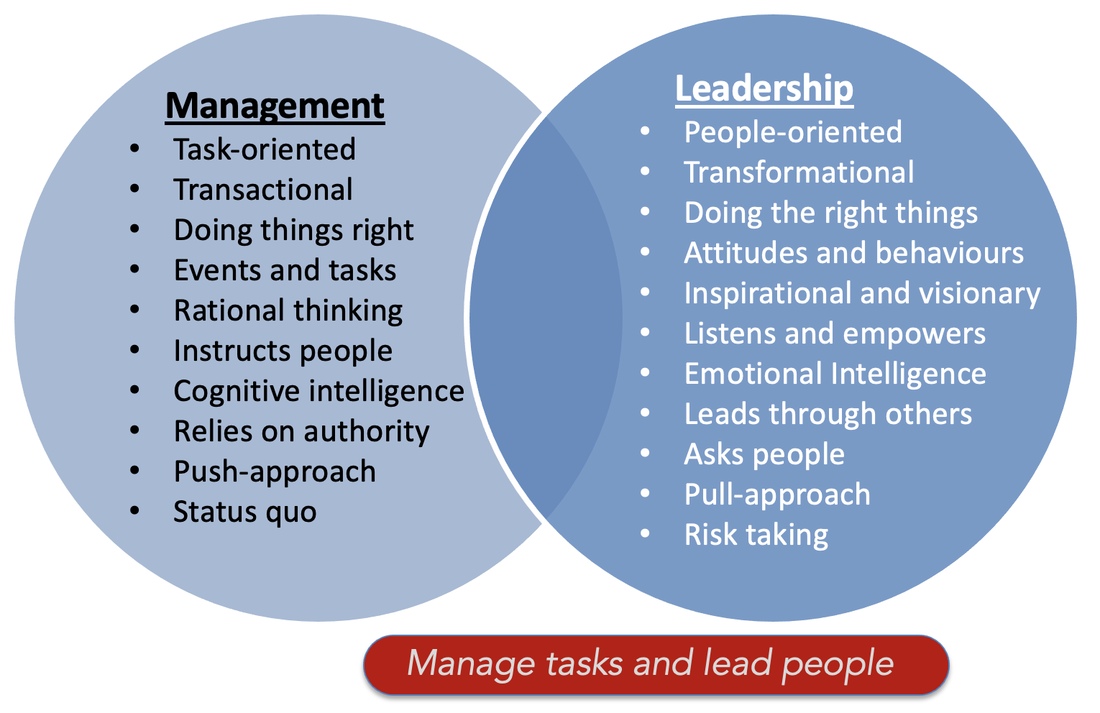
Leading and motivating a team is not only one of your most important roles as a project manager, it is also likely to be one of the roles you find the most challenging. Interacting with your team requires a different skill set entirely from managing tasks, events and processes. You cannot rely on rational and logical thinking alone but must draw on interpersonal skills such as listening, relating, encouraging, supporting and empathizing. One of the best ways to motivate a team is to find out what motivates each team member and what will enable him or her to do their job even better. To find out the answer, and to tap into your team members’ strongest sources of energy, you need to spend time with them, understanding who they are and what makes them tick. You must value each person’s contributions and do your outmost to make use of their individual strengths. When you align people’s individual aims and purposes with that of the organization and project, you will be in an ideal position to create a highly motivated team. Some of the things that motivate your team members may be relatively easy to implement and will have a big impact on performance—for example, giving a certain person more challenging work and playing better to his strengths. Another team member might want your support and backing to promote a certain initiative on behalf of the team, while a third person would be much more motivated if she were allowed to work flexible hours. These are all things you can control and can make an effort to implement. To emphasize your role as a motivator – and to become aware of what you can do to improve team motivation – answer the below questions as honesty as you can. Where you answer “yes” to a question, provide examples to back up your response. - Am I spending sufficient time with everyone on my team? (give examples) - Do I praise people when they do a good job? (give examples) - Am I aware of everyone’s strengths? - Do I use people’s strengths effectively? - Do I give people the level of support and the tools they need to succeed? - Do I delegate tasks completely when people are capable of working autonomously? - Am I working to improve each person’s confidence and motivation? - Do I know how each team member would like to be recognized and rewarded? - Do I empower people to implement new ideas? - Do I foster a culture of open communication, learning and development? - Do I set clear performance expectations? - Do I share the project’s vision, road map, and priorities with as much passion and insight as I possibly can? - Do I involve team members in the decision-making process? How many of the above questions could you convincingly answer yes to? Which areas stood out as needing attention? In which ways can you work to improve your team’s motivation and performance? In the next post we will look at more areas to focus on when crating a highly motivated team. Click here to read Part II.
If you liked this post, you may also like: 6 principles for building trusting and lasting relationships with your stakeholders Top Tips for Providing Effective Feedback My Story - Working Smarter; Not Harder Delegate Effectively and Thouhtfully
In order to become a highly effective and truly successful project management leader you must focus on the areas that make the most difference to the success of your project. These areas include risk and issue management, project planning, managing senior stakeholders, ensuring quality of the end product, and leading and motivating the team. Delegating lower level administrative tasks and detailed planning is important if you want to spend your time effectively. By delegating, not only do you free yourself up to focus on what is really important, you also help grow and develop other people. When you delegate correctly, you motivate and stretch the person you are delegating to, and you contribute to his or her professional development needs, confidence, and competence. Many project managers don’t delegate because they believe that they either have no one to delegate to or they don’t want to lose control of a certain task. You need to think more broadly, creatively, and strategically. Often team members are perfectly able to perform a task—for instance, one related to detailed planning and estimation—if they are given the opportunity and the right amount of support. To delegate effectively, be conscious about what you delegate, who you delegate to, and how you delegate. Keep the following in mind: Use Pareto’s Principle - Never delegate the 20 percent of tasks that contribute to 80 percent of your results. Delegate tasks that are not sensitive or high risk and that you are not particularly attached to. Choose tasks that someone else could potentially perform better than you can. Delegate tracking and administrative tasks - Delegate tasks such time sheet approval, financial tracking, taking minutes, documenting procedures and solutions, weekly reporting, creating newsletters, and keeping the document repository up-to-date. Engage a project administrator - Get a dedicated project administrator or support person on board on a part time or full time basis. Some organizations have a centralized project management office (PMO) that might be able to offer additional help and support. Delegate entire roles - Delegate specific roles such as test management, implementation management, analysis and detailed planning of particular products, work streams, or work packages. On a small project, you will double up and take on these roles yourself, but on a large project, it’s essential that you delegate them. Challenge, stretch and motivate – In deciding who to delegate to, ask yourself how much the particular task will challenge, stretch, and motivate the person to whom you plan to delegate. What’s in it for him? In which ways will this assignment contribute to his success and help him develop his skills and capabilities? Check people’s availability – Be clear on how mush time the person who you want to delegate to is able to commit. How much time would be required to complete the task –or role, and how could the person be freed up to work for you? How would taking on the task you are delegating affect his or her other work priorities? Verify the person’s competence – Before you delegate, check how competent the person is. What are his expertise and skills in areas such as planning, tracking, communication, and time management? The person’s competence will determine how much direction he needs from you. Verify the person’s commitment – Before you delegate, find out how committed the person is to whom you want to delegate. How motivated, confident, and driven is he? His commitment will determine how much moral support he needs from you. When people are both competent and committed you can manage them by exception and tell them to get back to you if they have a problem. Take time to think through the job - Decide exactly what you want to delegate and which results you want. Determine the performance standards you are going to measure the job against, as well as a schedule and a deadline. Remember to make the outcome as measurable as possible. Hand over the entire task – Seek to hand over the entire task to the person you are delegating to. Explain what is to be done and the reason for doing the task in the first place. Check in with the team member regularly to see how he is getting on. Gradually step back when you see that he is mastering the task. Provide support and direction - Give people the time, support, direction, and information required to succeed. Be patient, and do not look for mistakes. We were all trainees once and had to learn from someone more experienced. It is your support and direction, more than anything else that determines how successful you are at delegating. Final thought - People used to say, ‘ If you want the job done right, you have to do it yourself’. But that is old-school thinking. The modern approach is to say, ‘ If you want the job done right, you have to delegate it properly’. If you liked this post, you may also like: My Story - Working Smarter; Not Harder Top Tips for Providing Effective Feeback 10 Tips for Handling Conflict
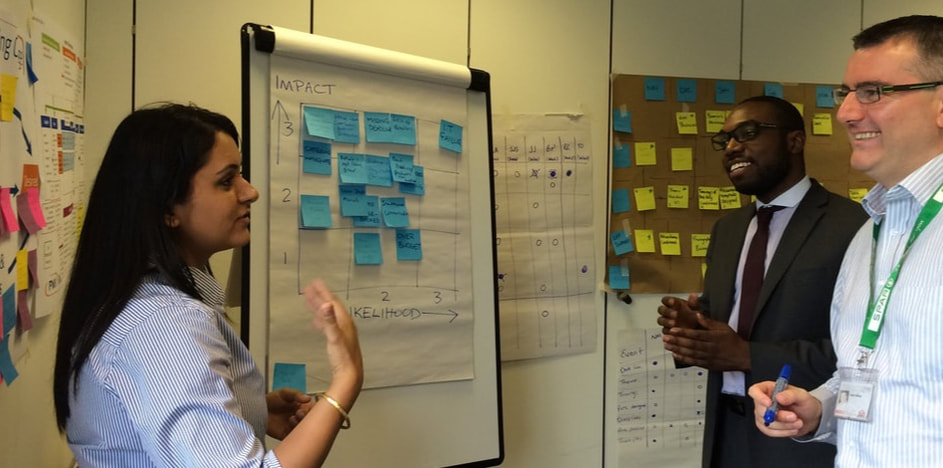
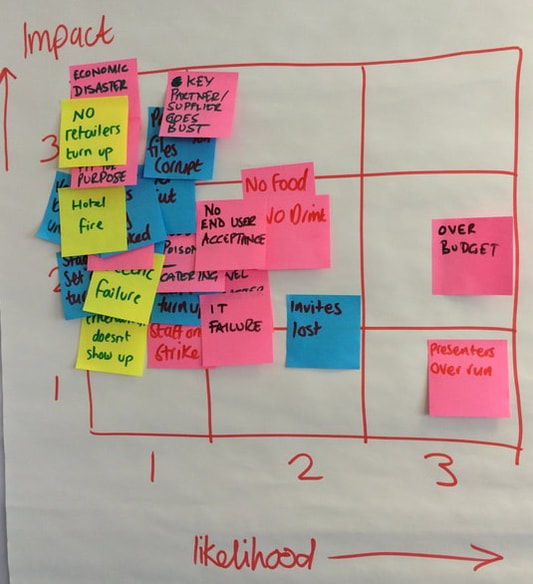
10 Steps to Effective Risk ManagementRisk Management is a fundamental part of a project manager’s job. It is an activity that needs to be attended to weekly – or sometimes even daily – and it is a discipline that really puts your proactive mindset to the test. Proactively identifying and mitigating risks means that fewer issues will arise on your project. It is always much easier to manage a risk than to wait until it becomes an issue. As Tim Lister and Tom DeMarco put it, " Risk management is how adults manage projects.” The effective management of risks is all about being proactive; you need to identify and tackle potential concerns before they turn into problems. Identifying, analyzing and managing risks is not a mechanical process to be carried out on a spreadsheet while sitting behind your desk. It is something you need to do in close cooperation with your team and stakeholders if you want to succeed. When you involve your team and stakeholders, not only do you improve the quality of the process, you also help promote a shared sense of responsibility for the project’s successes and failures. The key to good risk management is to discipline yourself to take some time out on a regular basis – on your own and with your team and stakeholders – to assess everything that could impede the success of the project. You must understand the nature of each risk you identify and its potential impact and determine how to best deal with it. You also have to assign an owner to each risk and follow up on any agreed-upon actions to reduce the probability of the risk materializing. Clear your mind and take a high-level view of the project; Play out different scenarios in your head, and try to see the project from different points of view.Also bear in mind that risks can be positive, and hence represent an opportunity rather than a threat to the project. You need to embrace opportunities by preparing a plan which supports them and exploits them. An example of a positive risk would be the opportunity to incorporate new technology that may become available during the execution of your project. The following 10 steps will help you to effectively manage risks on your project. 1. Create a Risk Log. Create a risk register for your project in a spreadsheet. Include fields for a unique reference number, date, risk category, description, probability, impact, owner, risk response, actions, and status. 2. Identify Risks - Brainstorm all current risks on your project with the project’s key team members and stakeholders. Go through all the factors that are essential to completing the project and ask people what is worrying them or what dangers they see. Identify risks related to requirements, scope, technology, resources, materials, budget, quality, stakeholders, suppliers, testing, rollout, business processes, legislation, and any other elements you can think of. 3. Identify Opportunities - When you identify risks, also factor in positive risks - or opportunities; i.e. events that in some ways could affect your project in a positive manner. What would the impact be, for instance, if the uptake of your product was bigger than expected, or if it was delivered ahead of schedule? What could you do to exploit this opportunity and plan for it? 4. Analyze Root Cause - Explore the root cause of each risk you have identified by asking why, why, why. Knowing the root cause will make it easier for you to mitigate the risk and to identify the most effective risk response. 5. Determine Impact - Establish the impact of each risk on time, cost, quality, scope, business benefits, and resourcing if it were to occur. Determine if the impact would be high, medium, or low. High impact could translate to: “would stop the project”, Medium impact: “would cause serious delays or rework”, Low impact: “would cause minor delays or rework”. 6. Determine probability – Establish if each risk has a high, medium, or low probability of occurring. High probability could translate to: “almost certain to occur”, Medium probability: “likely to occur” and Low probability: “unlikely to occur”. 7. Determine Risk Response – Focus your attention on the risks with the highest potential impact and highest probability of occurring. Identify what you can do to lower the probability of each negative risk happening and to mitigate its impact in case it does occur. Where risks are positive, determine what can be done to increase their probability and impact. 8. Assign Owner - Assign an owner to each risk. The owner should be the person who is best placed to deal with the risk and monitor it. Let the risk owners know that you have assigned them a risk, and get their buy-in. Liaise with them and agree the actions that need to be taken and by when. 9. Regularly Review Risks - Set aside time, at least once a week, to review your risk register and to monitor the progress of all logged items. Also schedule follow-up meetings with your team to identify new risks and to review previous actions and risk descriptions. Always pay the most attention to those risks that have the highest likelihood of occurring and the highest potential impact on the project. 10. Report on Risks - Ensure all risks with medium-to-high impact and probability are listed on your status report. Encourage a discussion of the top ten risks at the steering committee meetings so that executives get a chance to give input and direction. If you liked this post, you may also like: 8 Tips for Managing Project Costs Become a Proactive Project Manager 10 guidelines for estimating project effort Be a Project Champion
The purpose of writing a vision and mission statement is to make you think about what you want to achieve in your career, and what kind of project manager and leader you want to become. This is important if you want to be successful, as you can only reach your goals when you know what they look like. So why not write your own vision and mission statement? It will help you focus on, and achieve, the things you really want. A vision and mission statement encapsulates – in just one paragraph - what you would like to be, do, and have – and it defines what success and excellence look like to you. The statement should reflect your values, vision, goals, and purpose – and it's important that you feel excited and inspired by it. When you read it aloud, it should make you feel good and compelled to live by it – for instance; “My vision is to be honest and empathetic towards others and to build my reputation based on performance. I am committed to growing as a leader and to deliver value-added projects to the end users. My mission is to create and lead a dream team where everyone is playing to their strengths.” A vision and mission statement encapsulates the essence of what you want to achieve and how you want to present yourself. It states your intentions, summarizes your values, and demonstrates your commitment to living up to these values.Follow these 3 steps to compose your own vision and mission statement: Step 1: Answer the following questions as honestly as you can. o Which personal qualities do you most want to emphasize? o How can you use and display these qualities in a working environment? o What are the most important values you want to express at work? Step 2: Visualize yourself five years from now. o Imagine that you are managing and leading the project of your dreams. Envision that everything is exactly the way you want it to be: the type of project you are running, the industry it is in, its size and complexity, the people involved, and your own capabilities as a project manager. Imagine that you are every bit as successful as you want to be. Feel it and see it. o Draw a picture of yourself and your surroundings five years from now. Draw the things you see, feel, and hear. Use as many coulors as you want. o Keep imagining yourself in the future, and be as specific as possible in your observations. Where exactly are you? What are you doing? Who are you talking to? What does the project look like? How big is it? How complex is it? How are you feeling? Why do you want to be exactly where you are? Step 3: Sum up your vision and mission.
o How would you sum up your vision and mission as a project leader? What are the things you ultimately want to achieve? Who do you want to be? What do you want to do? o What will need to happen in order for you to feel proud of your progress as a project manager in five years’ time? o Write your own vision and mission statement. Remember that above all, you must feel excited and inspired by it. If you liked this post, you may also like: My Story - Working Smarter; Not Harder!Be a Project Champion Building Self-Esteem 10 Tips for Handling Conflict
Self-esteem is a state of mind that is self created. It is the way you think and feel about yourself and is related to how confident you are in your ability to cope with challenges. To be a strong and resourceful project manager who is respected by team members and stakeholders, you have to have enough self-esteem to naturally stand up for yourself, your team, and your project. You have to have enough faith in yourself and in your skills in order to comfortably make decisions and lead your team in the right direction. The more self-esteem you have, the stronger you will be and appear. This is not about being arrogant or headstrong. It is essential to balance confidence and humility. Self-esteem is simply about valuing your own contributions and believing in yourself. If you are able to do so, it will be easier for you to say no and push back when required. You will more easily be able to respond in calm, proactive, and resourceful ways. As an example, imagine a situation in which a senior stakeholder asks you to deliver a product significantly earlier than planned. You know that your team will not be able to achieve this deadline without making drastic changes to scope and quality. You also know that the reason for this request is not business-critical and that incorporating such a drastic change at this point in time will end up costing the client more money and will cause the project to take longer overall. In this situation, many project managers would feel insecure and would bow to the stakeholder’s request without openly questioning it. They may want to question it but they do not have enough self-confidence and belief in themselves to do it. One of the first steps in building self-esteem is to accept that you cannot please everyone and that your needs, rights, and feelings are as important as everyone else’s. Take a moment to assess if this is true for you. Start to notice when you are being overly critical of yourself. Whenever it happens, stop for a moment, and reframe the situation. It is all too easy for us to focus on what we feel is missing. Challenge yourself to see the positive in each situation and what you have to bring to the table. Take credit for the tasks and activities you do well and actively start to leverage your strengths. If you truly struggle to value yourself, find a confident mentor or coach who you can work with. If there are skills you feel you are lacking, take a course, read a book, or learn from a co-worker. Do not ignore these feelings. Empower yourself by being proactive and doing something about them. A good way to build self-esteem is to practice appreciation—of yourself. Each day, notice what you do well as a person and as a project manager. Write these strengths down in a notebook, and find new areas and capabilities to appreciate every day. See yourself as the confident project manager and leader you want to be. Another action you can take is to compose a vision and mission statement and stick it in a place where you can easily see it. Make sure it is positive and appealing and that it puts emphasis on feeling good and being confident. For example: “I feel confident and calm in everything I do as a project manager. I love and respect myself, and I value my uniqueness and my capabilities. My mission is to focus on my strengths and to have the confidence to withstand pressure from demanding stakeholders…”Read your vision and mission statement as many times as you can during the day. Close your eyes and imagine being strong and confident. Really feel it in your body. This will help you create a new pattern where you feel and think differently about yourself. It can take time to build self-esteem, but with the right support and willingness, you can change the way you feel about yourself more quickly than you think. o Read uplifting and motivational bookso Spend time with confident peopleo Notice and recognize your strengths, achievements, and uniquenesso Ask others what they think your unique talent iso Imagine being strong, positive, and confidento Identify a self-confident role model and learn from him or hero Set reachable goals, and break difficult tasks into smaller stepso Write an empowering vision and mission statement and live by ito Be objective and fair when assessing your capabilities o Work with a confident mentor or coach ******* Exercise 1. Think of a point in time when you felt really confident. Close your eyes and imagine it now. Where were you? What did you do? Who were you with? 2. Focus on the feeling you had in your body at that time. Where in your body did you feel a confident sensation? Be specific. Recall that feeling now. 3. Focus on this feeling in your body every day when you get out of bed and when you get to work. Try this exercise for a week and assess its impact. 4. Make it a habit to feel good and to appreciate your strengths and contributions. If you liked this post, you may also like: My Story - Working Smarter; Not Harder!Be a Project Champion10 Tips for Handling Conflict 6 Principles for building trusting and lasting relationships with your stakeholders
One of the most significant roles you have as a project manager is to lead and motivate the team. You have to focus on enabling team members to thrive. Look after them, value their contributions, and make sure that communications and relationships are good. Building relationships and gaining the trust of team members require you to be patient, open, and trustworthy – and to set sufficient time aside for impromptu conversations and regular one-on-one sessions. These conversations and sessions are opportunities for you to coach and support the team member and to provide and receive feedback. If people are to do their best, they need to know what they are doing well and what they could do better. Everyone needs feedback – especially team members who are relatively inexperienced or new to the project or organization. But also team members who are experienced and doing well need to know that their contributions are being appreciated. As the project manager, it is your job is to provide feedback. If feedback is to be effective, it must be given in an objective and constructive way; otherwise, it may be ignored or misinterpreted. Take the emotion out and keep it as factual and objective as possible. This is especially important when delivering so-called negative feedback. Do not focus on failures and mistakes. Always assume that people mean well and that they are doing the very best with what they have. Focus on the way forward and encourage people to take steps in that direction. Think carefully about how you communicate your message, as everyone reacts differently. If you want the person to have positive feelings about making a change, make sure that your message has that effect. Be mindful of your body language, tone of voice, and facial expressions. First think about what you want to communicate and which effect you want to have on the team member – then make sure your body language supports that message. Remember that providing feedback is a two-way process. Who is to say that the team member you are talking to actually did a bad job? Could it be that your instructions and support were lacking? Keep an open mind and allow for the possibility that you could be wrong. Listen carefully to the team member’s comments and views without interrupting. If a team member has made a genuine mistake or truly needs to improve in some way, be as specific about the situation as you can and give concrete examples of the behaviors that concern you. The more specific you are the more accurate and helpful your feedback may be. -> Make your feedback factual and constructive -> Be as specific as you can, and give examples -> Do not criticize; focus on the way forward -> Encourage an open dialogue by asking for comments -> Listen without interrupting -> Allow for the possibility that you could be wrong -> Be honest -> Let people know when they have done a good job -> Be mindful of your body language; it must support your message -> Know which emotional state you want your team member to end up with It is important to give feedback when a team member does something good, too. After all, everyone likes to feel important, valued, and appreciated. Often projects get so busy that you may forget about the little things that can make a big difference and boost morale. Make it a habit to give sincere praise on a regular basis. Let your team members know when they have done a good job. If you do not tell them that they are doing well, they may never know that you have noticed and appreciate their performance. They may eventually start doubting themselves. People love the feelings of success, contribution, and knowing that they make a difference. If you liked this post, you may also like: Create a Highly Motivated Team My Story - Working Smarter; Not Harder Delegate Effectively and Thouhtfully 10 Tips for Handling Conflict
The need for highly competent, confident, and effective project managers is growing, in a world where projects are becoming larger, more complex, and increasingly cross-cultural. It is no longer enough to master the essential tools and techniques involved in managing tasks, costs, and resources. To be an excellent project manager, you must have drive, confidence, and attitude, and be able to lead your team to success through your vision and engagement. You must become a project management champion and take your team on a journey by sharing an appealing project vision and a road map for achieving that vision. It is not your ability to manage tasks and resources that will set you apart. It is your ability to build relationships and lead the team to success through your vision and engagement. As much as knowledge matters, it is your drive, confidence, and attitude that will really help you get your projects over the finishing line.To become a project management champion, you must fully embrace the goals, objectives, and plans of the project. Spend time visualizing what the end state looks like once the changes have been implemented and the objectives achieved. See it the way the end users and beneficiaries see it. Feel it, taste it, and smell it. Take ownership, not just for delivering project outputs and capabilities, but for delivering the ultimate business benefits. The greater clarity you have regarding the future you wish to create, the easier it will be for you to provide focus and direction to the team. When you understand and take ownership of the strategy for achieving a successful outcome, you are able to inspire and motivate the team and make the day-to-day decisions necessary to reach that future. Keep the vision alive and make it relevant to your people. Draw them into it by illustrating how they fit in and how each of their roles matters to its overall execution. As a project champion, you are more than a manager of people and resources. You become an inspiration to the team and the embodiment of the project. You become an agent of change who measures and monitors the ultimate business benefits. You become the person who makes sure that the customer adopts and implements the necessary business processes and procedures to support the end product so that the change initiative is ultimately successful. As a project champion you serve your team and your customer and you set a great example for others to follow. *** · How well do you understand your project’s vision and objectives? Give yourself a score between 1 and 10.· What would need to happen in order for you to rate your understanding of the vision 10 out of 10?
· What can you do to inspire your team to achieve the vision?· What can you do to become an agent of change?
If you liked this post, you may also like: My Story - Working Smarter; Not Harder! Become a Proactive Project Manager 10 guidelines for estimating project effort Risk management is how adults manage projects
A number of years ago I was, like many other project managers, working hard on a project that seemed to become increasingly complex, with tighter and tighter deadlines. I was stressed and overworked, and I was not leveraging my capabilities in the best possible way. I spent most of my time planning and tracking tasks and dealing with urgent issues. There was not much time left for being proactive, thinking ahead - or spending quality time with team members or stakeholders. I was under a lot of pressure and did not feel that I had anyone to delegate to. But more importantly, I was not enjoying myself, and I was not always in control of the project. A number of things made me change. The defining moment was a coaching session in which I discussed my issues with stress and managing my workload. Within just one hour, I realized that one of my core beliefs was that project management is inherently stressful (and painful), and there is nothing I can do about it. At that stage in my career I had been managing projects for well over ten years, and my experiences told me that project management was a very demanding and stressful job. Period. Recognizing that project management does not have to be stressful was a true eureka moment for me. I instantly understood that my belief was subjective, not the objective truth, and that I had the power to challenge it and change it. What a shift that was! Understanding that my belief was not necessarily true allowed me to start working with it and to slowly dissolve it and become more effective and valuable in my job. When you realize that you have the power to change your beliefs and remove a limiting factor that has been constraining you, you have an “aha!” moment. You feel relieved and empowered. My eureka moment made me pause, take a step back, and do less .I did this to regain my energy and to free up time to collect my thoughts. And then something magical happened. New ideas started to pop up, and I began to see patterns and connections that I had not noticed before. I looked at the bigger picture and started to understand how I could leverage my strengths and work more effectively. I gave myself the opportunity to be more proactive and to work smarter. I had a closer look at myself as a project manager and the values that were driving my work. I examined my own worth, and I explored my boundaries. Why was it so important for me to work long hours and to micromanage my team? Was there a better way to get things done? I had to acknowledge that it was not the hours I put in that mattered, but the quality of my work. I realized that in order to produce better-quality work, I would have to change the way I spent my time. One of the changes I made that had a significant impact was delegating more. I recognized that I could not do everything by myself and that I needed to get better at asking for help and support. I got a project administrator on board to help with lower-level task tracking and administrative work. It was essential work, but it was not essential that I did it. When I started delegating more, my focus shifted. I spent more time liaising with the team and key stakeholders, listening to their ideas and concerns and looking at what we could do better. I started focusing more on picturing the end state of the project and proactively reducing the risks associated with the road to getting there. This shift enabled me to become more proactive and effective, and to leverage my strengths better. Today, I put as much emphasis on people as I do on tasks. I listen, I build strong relationships, and I trust others. I manage and lead people in a way that complements their individual needs, as opposed to micromanaging everyone across the board. **** If you are facing some of the same challenges as I did, first free up time to think clearly. Maybe you feel stressed because you spend too much time being reactive and not enough time on pro-active and strategic project activities. Maybe you too, need to get better at delegating, saying no and levering your strengths better. A good way to go about this is to identify the 20 percent of tasks and activities you do during your day or working week that produce 80 percent of your results. What are the activities that you do really well and that make all the difference in your performance and increase the likelihood of project success? Then identify what you can do to focus relatively more time on the 20 percent of tasks that matter. Which activities do you need to stop doing in order to create more space for the 20 percent that matter? How can you start doing that? If you liked this post, you may also like: Be a Project Champion 6 principles for building trusting and lasting relationships with your stakeholders Create a Highly Motivated Team Delegate Effectively and Thouhtfully
Proactive project manages are people who focus their efforts and attention on the long-term as opposed to being reactive in the present moment. They believe that their actions matter and that they can positively influence a situation by doing something about it. One of the best ways in which you can be proactive as a project manager is to work with your team and stakeholders to actively identify, analyze and mitigate project risks before they turn into issues. You can also make a concerted effort to build strong and lasting relationships with your stakeholders so that you are able to draw on their knowledge and support the day you need it. When you keep your stakeholders abreast of developments and have an excellent rapport with them, they are very unlikely to ever turn against you. They respect you and they know that you are actively working to improve all aspects of the project on their behalf. Another way to be proactive is to carry out project reviews and to liaise with your team members on a one-to-one basis. Ask for feedback and investigate if there is anything at all you can do to optimize the way the team works. In addition, be proactive and explore if your QA activities are as good as they can be. Poor product quality is one of the biggest reasons for project failure. Reactive is the opposite of proactive. Reactive people often hold a belief that they have no control over a situation. This could relate to the behavior of an unreasonable stakeholder or the issues that arise during a project. They surrender and wait until a potential problem has become a burning issue before they take action. One of the reasons why some project managers give in and become reactive, is that their workload is so big that they feel they have no option but to fire fight in the present moment. But in reality we always have an option even if it is not an easy one. If you feel overloaded and overworked, look at how you can delegate more, how you can get better at saying ‘no’ to new requests and how you can optimizing the way you manage your time. To become more proactive, make it a habit to regularly engage in the following; - Spend time on your own and with team members identifying anything which could go wrong on the project. Thoroughly analyze the risks and identify an owner and mitigating actions. Do this as often as possible. - Ask team members as often as you can what is preventing them from moving forward or what could make them work more effectively. - Build strong relationships with all key players on the project. See things from their point of view, understand their interests and address their issues and concerns. - Carry out project reviews and encourage a culture of learning and contribution. Discuss how past issues can be avoided and take action to make improvements. - Demonstrate and prototype the solution to the customer and end users as often as possible. Ask for feedback and verify that what you are building matches their requirements and expectations. - Identify and review your project controls on a regular basis. Assess if they are working as expected and keeping cost, quality and time under control. - Actively manage your stakeholders’ expectations through face-to-face meetings and regular project reporting. Make them appreciate which risks, issues and constraints you are facing. Make sure there are no negative surprises. - Organize knowledge sharing and fun team building activities to improve morale and motivation. - Assess your own working practices and determine how you can optimize the way you spend your time. Could you for instance start delegating more? If you liked this post, you may also like: My Story - Working Smarter; Not Harder! Be a Project Champion Delegate Effectively and Thoughtfully Risk management is how adults manage projects
|